
The portable lighting market is evolving as buyers look for products that can do more than provide basic illumination. Rather than focusing solely on brightness or battery size, they are increasingly considering versatility, compact form factors, and hands-free positioning. Understanding this transition helps buyers select practical products and allows brands to optimize their OEM/ODM development strategies.
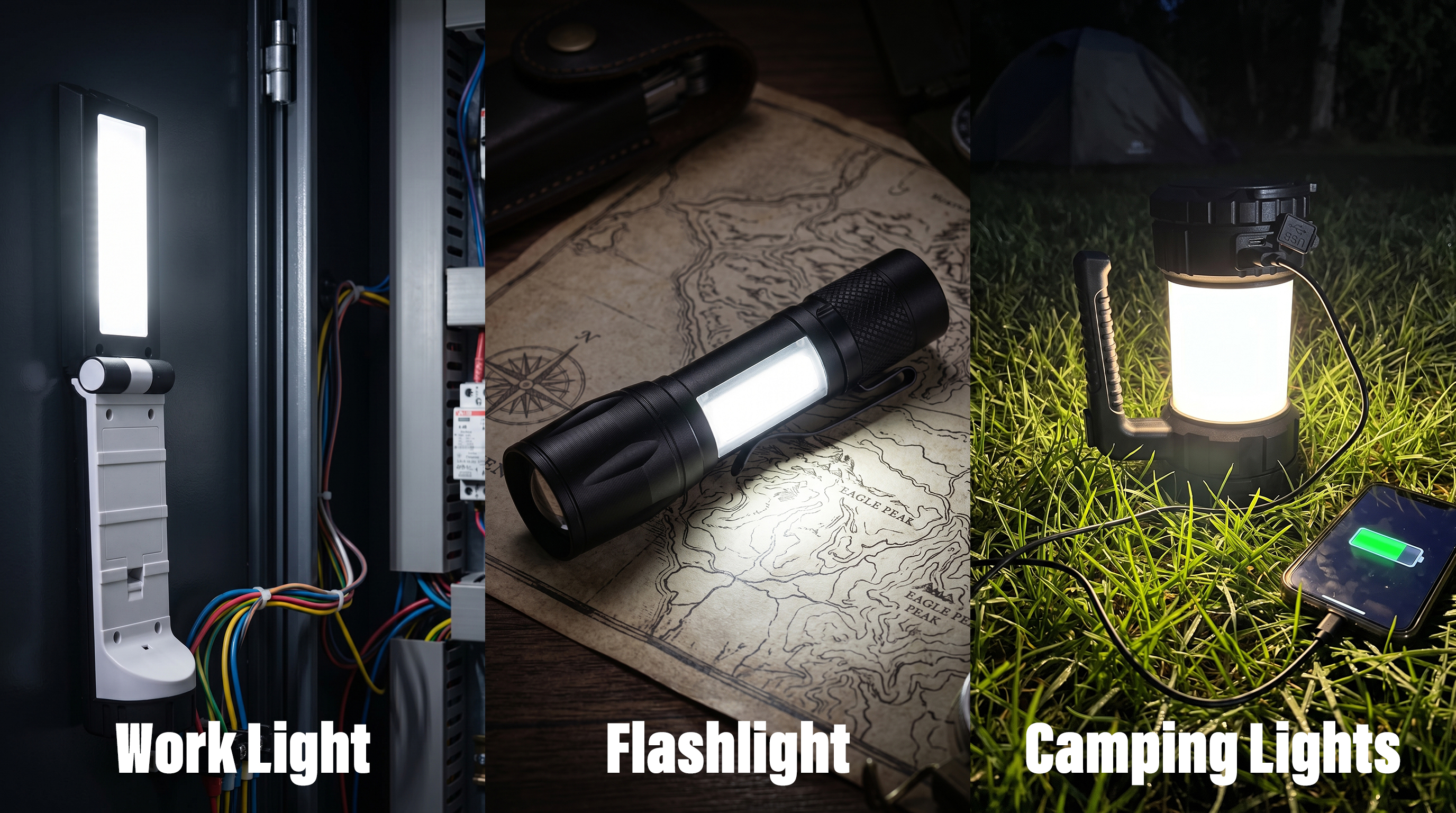
Traditional portable lights served a single objective: basic illumination. Modern designs combine core lighting functions with practical features to support different real-world use cases.
Work Lights: Evolved from simple floodlights into versatile tools featuring strong magnetic bases, hanging hooks, folding mechanisms, and adjustable positioning features.
Flashlights: Transitioned from basic long-throw handheld beams to hybrid tools with secondary COB floodlights or side-panel area lighting.
Camping Lights & Lanterns: Now balance ambient outdoor illumination with different lighting modes and, on some models, power bank functionality for charging small devices.
Consumers, tradespeople, and commercial buyers are actively consolidating their gear. Storing and carrying multiple single-purpose devices is far less efficient than deploying one adaptable unit that covers several scenarios.
| Scenario | Traditional Setup | Multi-Functional Solution |
| Outdoor & Camping | Flashlight + Area Lantern | Multi-functional lantern or portable light with power bank output |
| Vehicle Maintenance | Handheld flashlight + Work light | Slim folding work light with magnetic mounting |
| Home Emergency | Flashlight + Emergency light | Compact multi-mode portable light with long standby capability |

As portable lighting becomes more versatile, compact and easy-to-store designs are becoming increasingly important for daily usability.
Space Efficiency: Slim profiles allow tools to easily store inside packed toolboxes, narrow glove compartments, or crowded outdoor bags.
Foldable Structures: Folding designs can reduce storage space and make portable lights easier to carry and store between different locations.
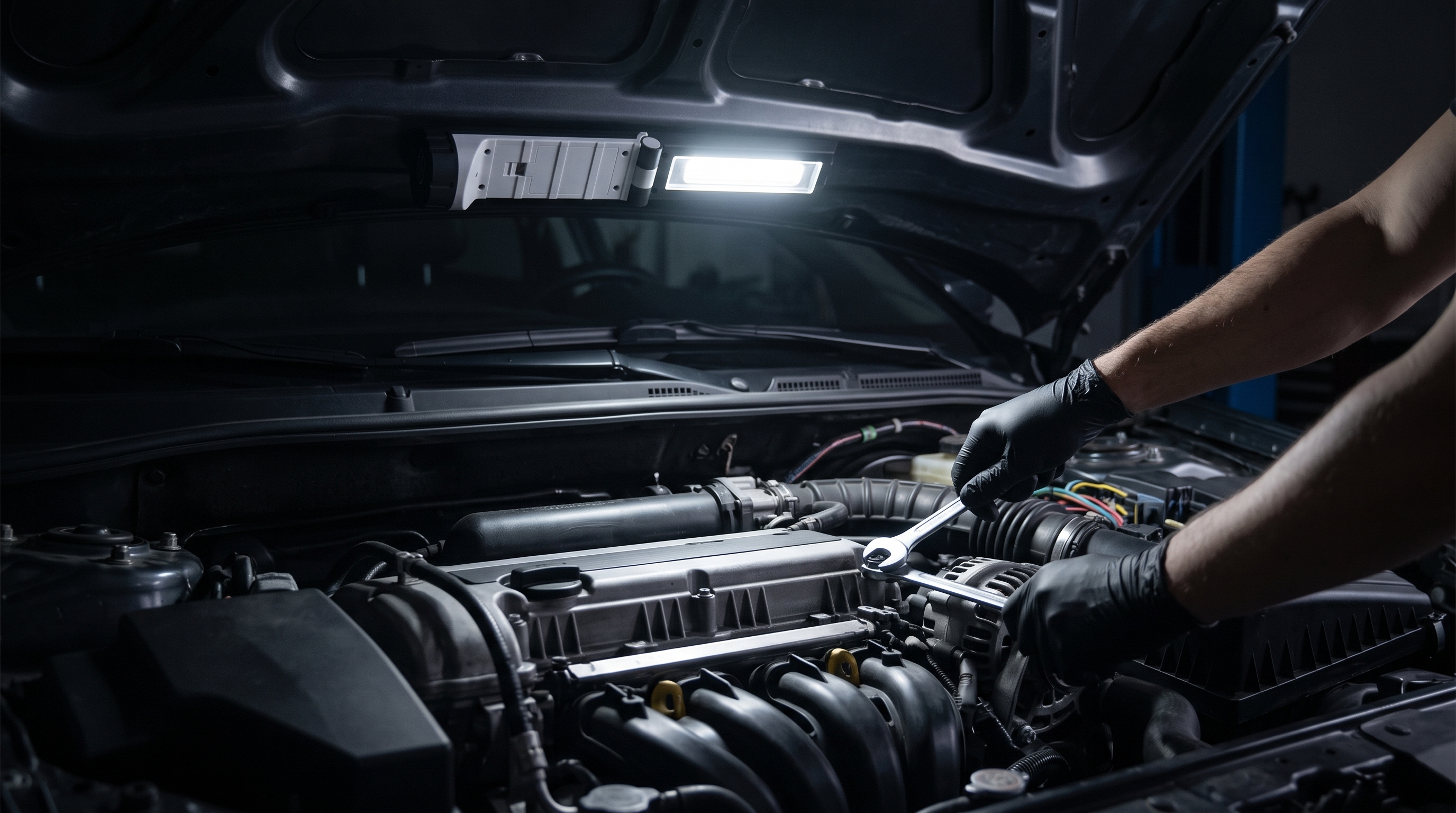
Hands-free operation is a fundamental requirement across automotive repair, job-site tasks, and outdoor recreation. Flexible mounting and positioning options make portable lights more practical in real-world scenarios.
Magnetic Bases: Allow direct, secure attachment to iron surfaces, vehicle frames, metal shelving, or structural steel.
Hanging Hooks & Clips: Enable quick suspension inside tents, from overhead pipes, or attached to clothing straps.
Adjustable Brackets & Folding Arms: Allow users to direct light exactly where it is needed without holding the light continuously.
When sourcing or purchasing portable lighting products, raw lumen ratings alone are insufficient. Sourcing managers should evaluate overall mechanical and optical utility:
Practical Feature Combinations: Assess whether the secondary light modes, power output, or mounting hardware match your target market's specific use cases.
Ease of Operation: Ensure switches, brackets, and magnetic mounts operate smoothly and intuitively in daily working conditions.
Durability: Check whether the product construction and materials are suitable for the intended operating environment. Where applicable, review drop resistance or water-resistance specifications.
For brands looking to launch competitive product lines, adding features without clear utility creates unnecessary cost and product clutter.
Purposeful Feature Integration: Avoid superficial gimmicks. Focus on complementary, high-demand pairings—such as combining a slim inspection light with a strong magnetic fold-out base.
Engineering Balance: Maintain a realistic balance between structural durability, thermal dissipation, overall weight, and bill-of-materials (BOM) cost.
Flexible OEM/ODM Customization: Offer customization options such as battery capacities, lighting modes, casing colors, logo placements, custom packaging, or mounting options to meet the needs of different regional markets.
The growing demand for multi-functional portable lighting reflects a broader shift toward products that offer greater flexibility in everyday use. For buyers, the focus is moving beyond brightness alone toward useful features, compact designs, and flexible positioning. For manufacturers and brands, this creates opportunities to develop lighting products that combine practical functions without making them unnecessarily complex.
As portable lighting continues to evolve, products that solve more than one lighting need while remaining simple to carry and use are likely to remain attractive across outdoor, home, automotive, and work-related applications.


