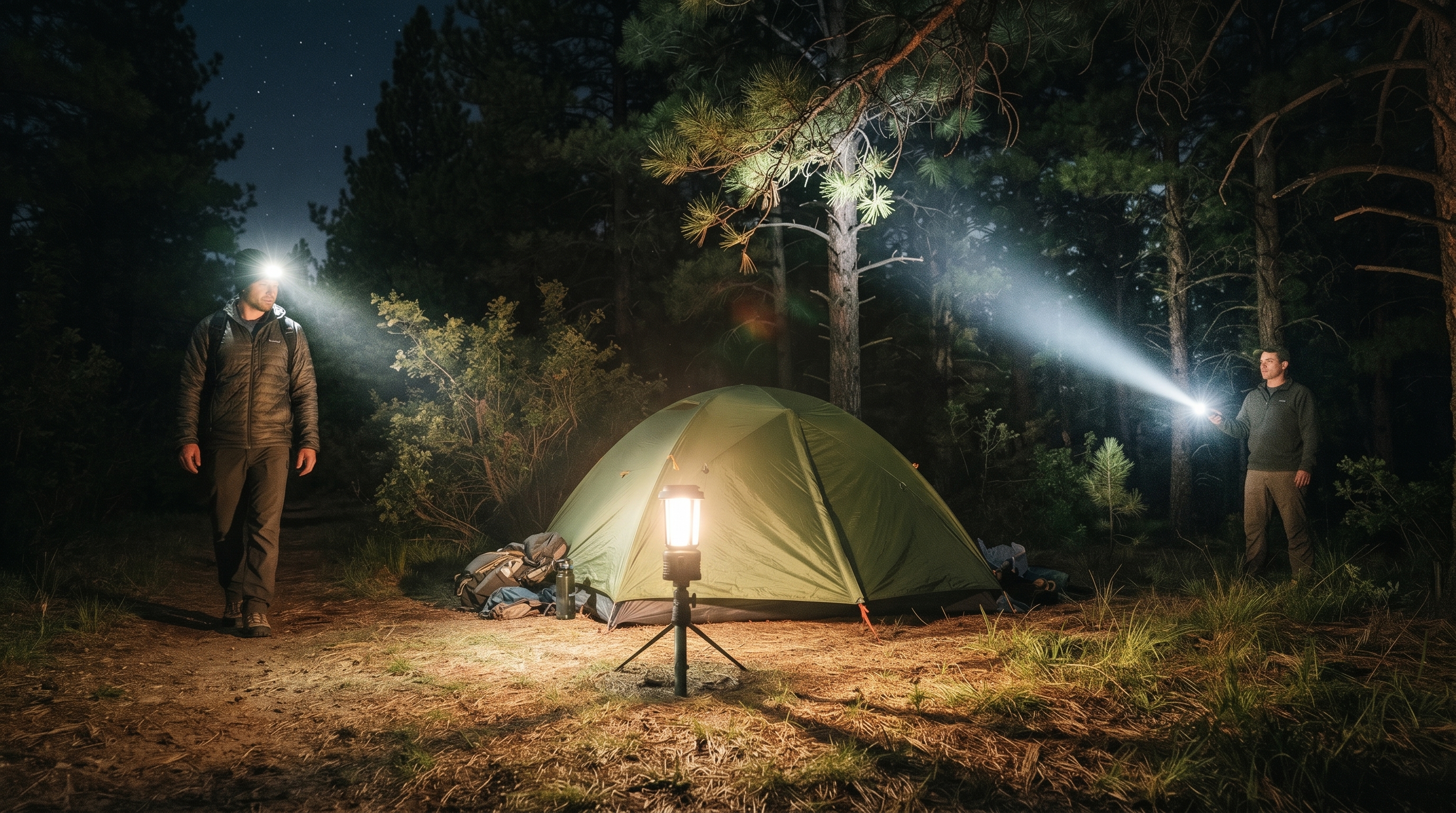
Choosing the right portable LED light is important for safety, convenience, and reliable performance during outdoor activities. Whether you are camping, hiking, cycling, or working outdoors, the right light should match the environment and the way it will be used.
Different outdoor scenarios demand specific lighting functions, beam spreads, and mounting options:
Camping & Backpacking: Requires broad, ambient area illumination combined with hands-free task lighting (Camping Lights / Headlamps).
Hiking & Trail Walking: Needs a balance of long-distance forward illumination and lightweight mobility (Headlamps / Flashlights).
Cycling & Road Safety: Requires reliable forward visibility and a suitable beam pattern to improve visibility on roads and trails (Bicycle Lights).
Outdoor Work & Maintenance: Requires high durability, flexible mounting, and wide coverage (Work Lights / Headlamps).
Emergency & Backup Use: Benefits from reliable, long-lasting illumination with intuitive controls (Flashlights / Camping Lights).
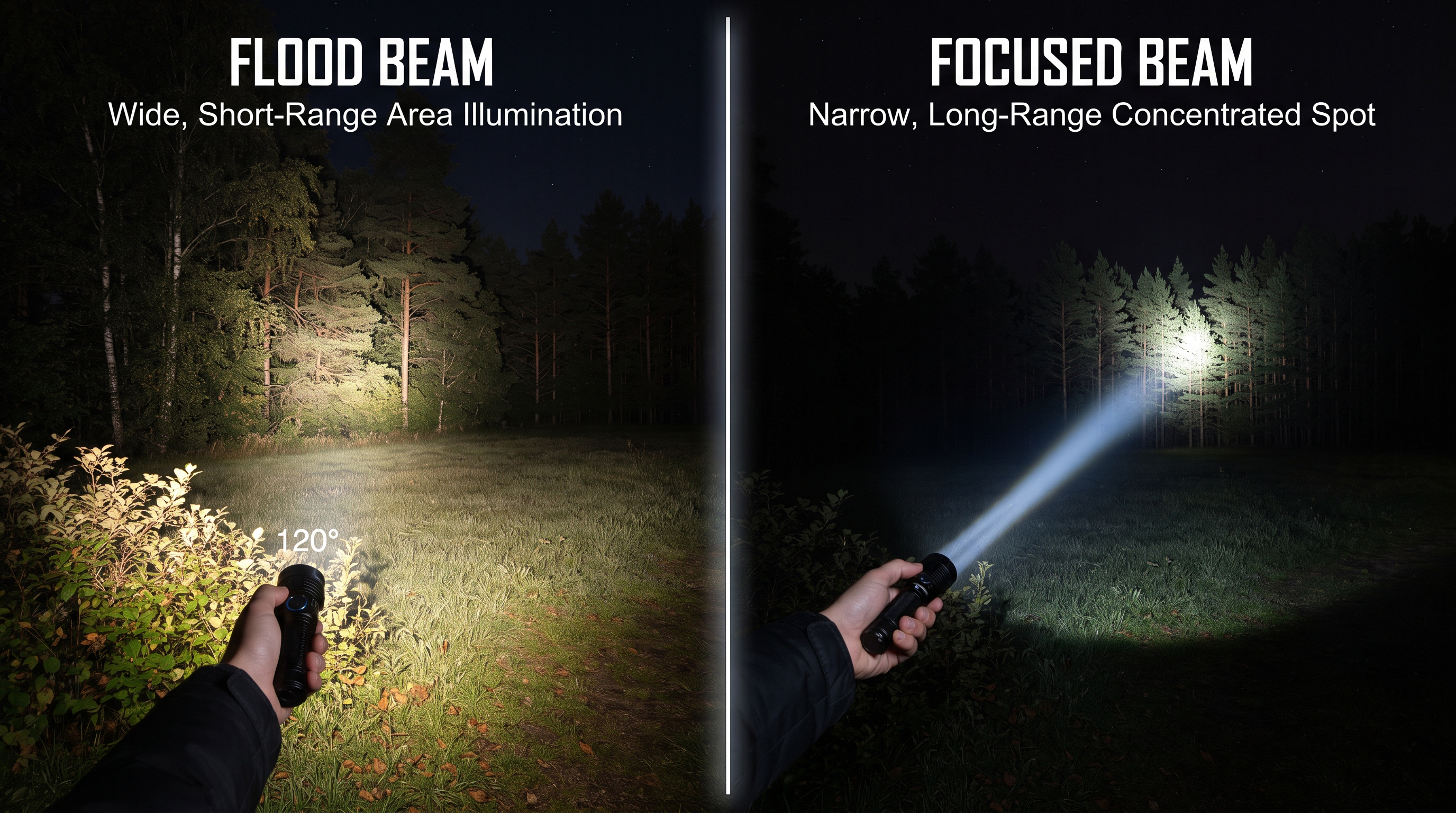
Brightness and beam profile directly impact how effectively a portable light performs in a given setting:
Lumen Output: Choose the lumen output according to the activity and environment. Lower output is suitable for close-range tasks and campsite use, while higher output is useful for hiking, navigation, and wider-area illumination.
Flood Beam: Delivers a wide, soft beam that illuminates a broad area, making it ideal for campsite setups, ambient lighting, and close-quarters work.
Focused Spot Beam: Projects a concentrated beam over longer distances, suited for trail navigation, hazard identification, and directional lighting.
The right power source depends on the activity, usage time, and access to charging.
Rechargeable
Best For: Frequent use and situations where convenient recharging is available.
Key Advantage: Built-in rechargeable batteries can be charged conveniently using USB chargers, vehicle adapters, or power banks, making them suitable for regular use.
Replaceable Batteries
Best For: Extended outdoor trips where charging is not readily available.
Key Advantage: Allows users to quickly restore power by replacing the batteries.
Balance power requirements with physical handling during product selection:
Runtime: Ensure the battery capacity matches the required operating hours, especially for overnight or multi-day applications. Multi-mode settings allow users to adjust brightness and extend overall runtime.
Portability & Weight: Look for lightweight, ergonomic designs that are easy to carry during extended outdoor activities without sacrificing durability.
Outdoor products must withstand variable weather conditions and rough handling:
Water Resistance: Evaluate the required IP rating based on the operating environment. Splash-resistant models can work well in light rain, while higher IP ratings provide greater protection against water and dust, depending on the specific rating.
Build Quality: Materials such as ABS, PC, silicone, and anodized aluminum offer different levels of durability, flexibility, and impact resistance depending on the product design.
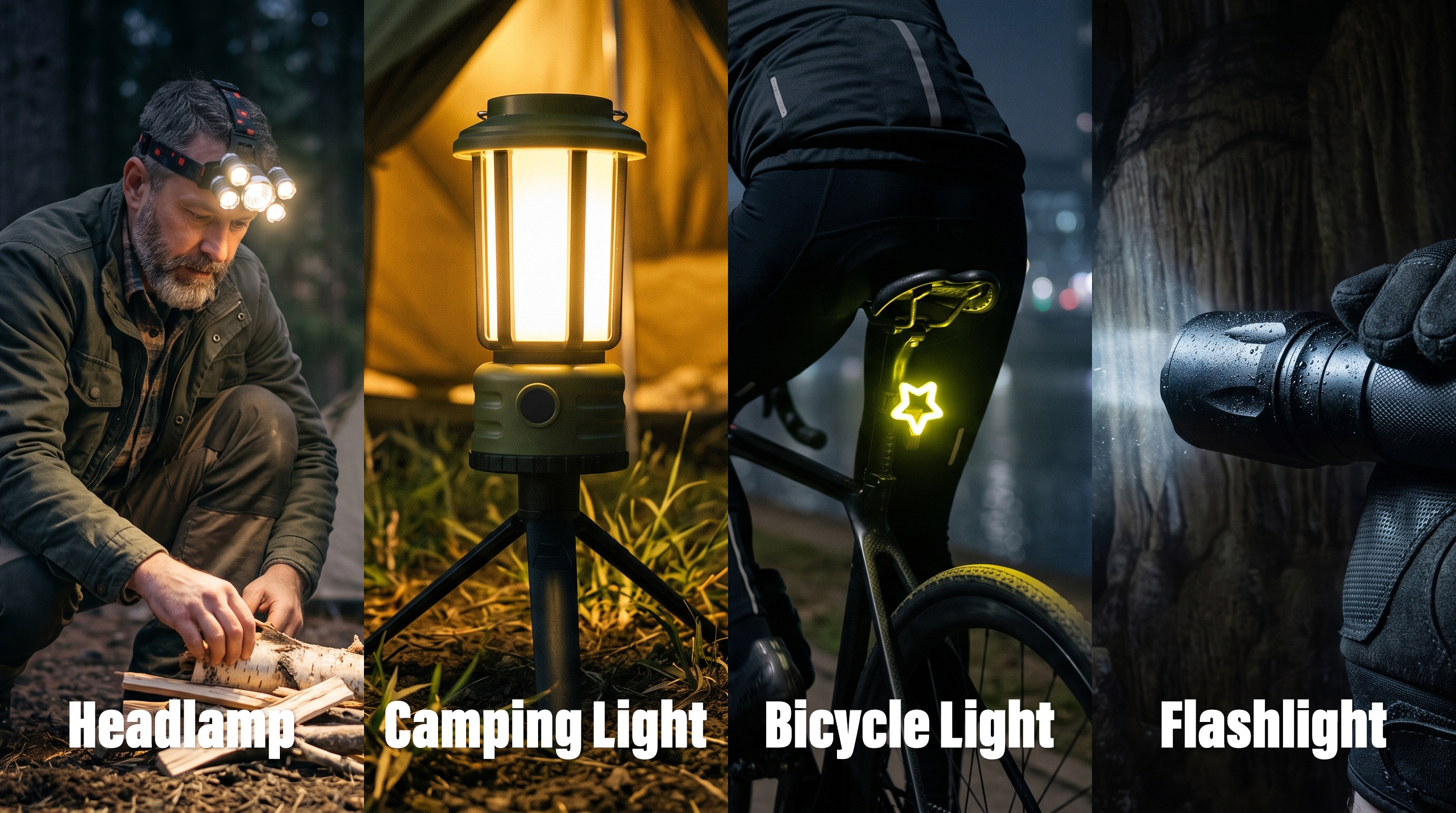
The table below summarizes the recommended lighting solutions for common outdoor applications:
| Outdoor Activity / Application | Recommended Portable Light |
| Camping | Camping Lights / Headlamps |
| Hiking | Headlamps / Flashlights |
| Cycling | Bicycle Lights |
| Outdoor Work | Work Lights / Headlamps |
| Emergency | Flashlights / Camping Lights |
Choosing the right portable LED light comes down to the activity, environment, and required features. By considering brightness, beam type, power source, runtime, portability, and durability, you can select a lighting solution that fits the intended application.
Looking for reliable portable lighting solutions for your business? Explore our portable LED light collection or contact us to discuss your OEM/ODM requirements.


